
Pay attention to Hungary
With the country’s election less than two weeks away, authoritarians everywhere are betting on Budapest

Pre-order my book, On Courage: How to Be a Dissident in an Age of Fear
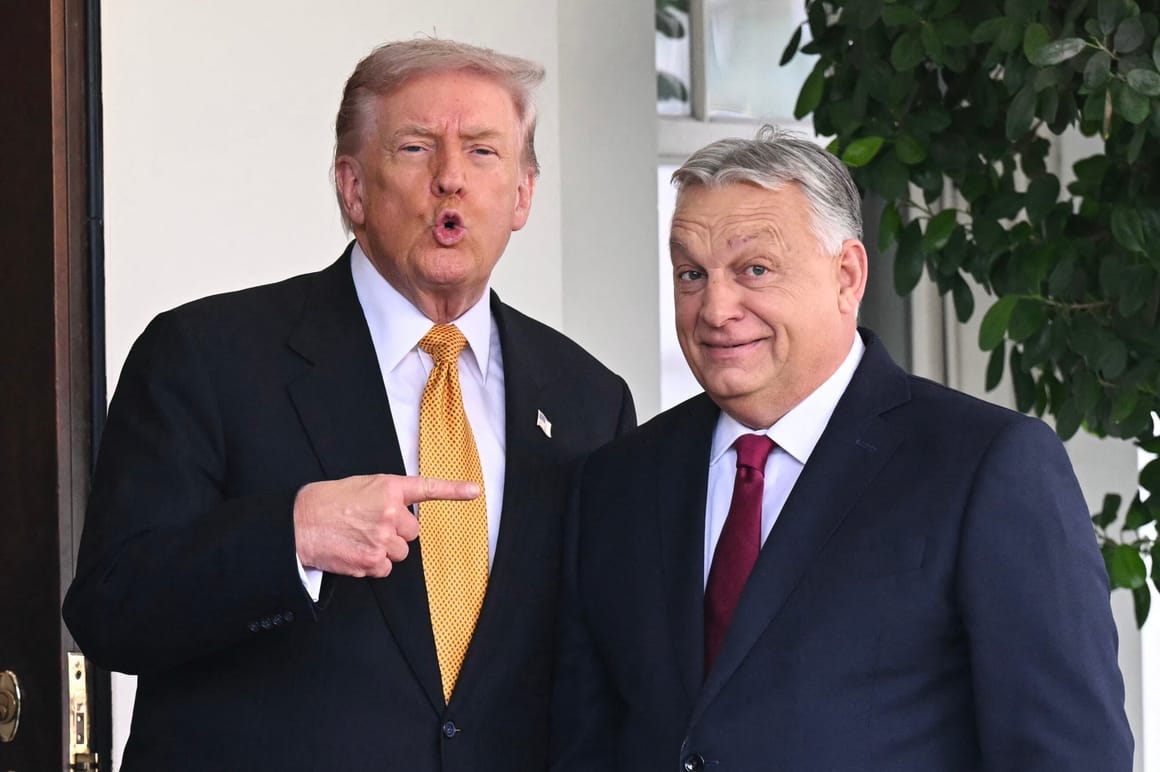
Donald Trump is almost obsessively invested in making sure Hungary’s authoritarian president Viktor Orbán wins that country’s April 12th election. So are a group of far-right leaders across the world: Israel’s Benjamin Netanyahu, Argentina’s Javier Milei, the Netherlands’ Geert Wilders, and Germany’s Alice Weidel. They’ve all shown up to campaign for Orbán. J.D. Vance is slated to travel to Hungary next week.
Why is the global far-right so concerned with one election in Central Europe? Because Orbán has championed a model of “illiberal democracy” that the movement seeks to emulate: keep elections, but undermine every other instrument of democracy. Orbán’s governance structure allows for a powerful nationalist leader to steadily weaken courts, media, and opposition in the name of protecting the nation.
A people-powered repudiation of this kind of soft-autocracy on April 12 would make life harder for the world’s many wannabe-Orbáns – including the one at 1600 Pennsylvania Avenue.
Orbán has stacked state institutions with his loyalists and rewritten the constitution to fortify his party’s rule. He’s presided over a growing culture of corruption in the country. He’s waged a sustained war on the independence of the judiciary. He’s also Russia’s greatest ally in the European Union – and was the first European leader to endorse Trump in 2016. The prime minister’s power is increasingly difficult to contest, and he’s the central node of a growing network of illiberal parties across Europe and the world.
But there’s a reason the far-right is sending political lifeboats. The Atlantic’s Anne Applebaum wrote this week that Orbán’s campaign messaging – reliant on AI videos and fake storylines about nonexistent threats – is starting to collapse on itself. Applebaum, a leading expert on authoritarianism, says that it’s all feeling tired, with tactics that “belong to the past.”
But she also notes the possibility – expectation, even, among Hungarian opposition figures – that a false-flag operation is coming. Marco Rubio, on a recent trip, ominously offered support for the MAGA ally “if you face things that threaten the stability of your country.”
Such a move would mirror the path Vladimir Putin originally took to seize power in Russia: In 1999, as prime minister, Putin likely orchestrated a string of bombings – blamed in state media on Chechens, who were fresh from a devastating war with Russia – to stoke fear and offer his thuggish persona as the antidote. The maneuver worked and helped propel his ascent to the Kremlin.
We don’t yet know what will happen in Hungary. By every polling metric, Orbán arch-rival Péter Magyar is solidly in the lead. But the Hungarian strongman is running the playbook autocrats use when the tools of democracy fail them: Intimidate vulnerable voters, supercharge fake stories in the news, manufacture a “threat,” and tell people that you are willing to do the dirty work that others won’t to in order keep them safe.
After sixteen years in power, Orbán is so important to Trump and his global alliance of thugs because he’s proof of concept – not only for how far they can take their retrograde policy agenda, but also how far nominally liberal societies will allow them to go to stay in power before rejecting them. But on April 12th, the people of Hungary may do all of us a great service. Keep your eye on Central Europe.